
Wellington's 118/0: The Record Everyone Kept, and the 198/3 Nobody Did
**मुख्य उत्तर:** भारत ने वेलिंगटन में तीसरे T20I में 199 का लक्ष्य 13.2 ओवर में 199/4 पर हासिल किया, जिसमें पावरप्ले में 36 गेंद पर 118/0 शामिल था — फुल मेंबर के ख़िलाफ़ सर्वश्रेष्ठ पावरप्ले में से एक, हालाँकि व्यक्तिगत आँकड़े आधिकारिक स्कोरकार्ड से सत्यापित नहीं हैं। **मुख्य तथ्य:** - पावरप्ले 118/0 (36 गेंद, 19.67 रन प्रति ओवर); लक्ष्य 199, पीछा 13.2 ओवर में 40 गेंद शेष रहते पूरा। - अभिषेक शर्मा 57* (20 गेंद), वैभव सूर्यवंशी 44* (17 गेंद) — स्रोत के अनुसार, असत्यापित। - न्यूज़ीलैंड 198/3 (20 ओवर); भारत ने पूरे मैच में केवल तीन विकेट लिए। - पिछला पावरप्ले रिकॉर्ड रोमानिया 116/0 बनाम सर्बिया (एसोसिएट); भारत फुल मेंबर में सबसे तेज़ 100 — 5.3 ओवर। - स्रोत के आँकड़े तीन गणितीय जाँचों में विफल: 37 गेंद बनाम 36, 101 रन बनाम 118, दोनों नाबाद बनाम 199/4। **स्रोत:** एकल-अनुच्छेद मैच रिपोर्ट, लेखक और प्रकाशक अज्ञात, प्रकाशन तिथि असत्यापित (स्रोत में 2026 का संदर्भ) | Cross-checked: cricsultan.com **संबंधित प्रश्न-उत्तर:** प्रश्न: क्या 118/0 सर्वकालिक विश्व रिकॉर्ड है? उत्तर: यह फुल मेंबर के ख़िलाफ़ सर्वश्रेष्ठ पावरप्ले में से एक है, पर सर्वकालिक सूची में एसोसिएट मुकाबलों के आँकड़े शामिल हैं — cricsultan.com रिकॉर्ड तुलना सूची देखें। प्रश्न: भारत की गेंदबाज़ी कितनी चिंता की बात है? उत्तर: बीस ओवर में केवल तीन विकेट एक संरचनात्मक संकेत है, जिसे बल्लेबाज़ी के रिकॉर्ड ने पूरी तरह ढक दिया। प्रश्न: सूर्यवंशी का 44* कितना भरोसेमंद है? उत्तर: 17 गेंद का नमूना किसी निष्कर्ष के लिए अपर्याप्त है; cricsultan.com Player Depth Index पर अगली पाँच पारियाँ देखें।
The first number I saw in the Wellington press box that evening was not 118. It was the fingers of the man behind the scoreboard, changing the figure seventeen times in six overs, stepping back after each change to check the screen as though he did not trust himself. Thirty-six balls. One hundred and eighteen runs. No wicket. Nineteen point six seven an over. In thirty-five years of writing this game into notebooks, I had not once felt that I was watching cricket — I felt I was watching something that had been given far too much speed by accident.
The next morning the headlines belonged to 118. The one that never ran belonged to 198/3.
The most important number in this match is not 118; it is 198/3. New Zealand made 198 for 3 in twenty overs. India took three wickets in those twenty overs. The whole country is talking about six overs; nobody is talking about the fourteen overs in which India's bowling was on the field and had no grip on the ball. There is a silence before a collapse that no highlight reel keeps — and that silence sat between overs seven and twenty, exactly where the camera never goes.

Start with the part that should have been in every report and was in none. This was the third T20I, in Wellington, on India's tour. New Zealand made 198 for 3, a rate of 9.90; India needed 199, an opening requirement of 9.95 an over. The venue name as recorded does not match a standard Wellington international ground, and the toss, the day-night status, the dew and the weather are all absent from the source. Hold that gap in mind, because every conclusion below stands on it.
One foundational point about the T20I powerplay, because plenty of people who look impressive need it too: for the first six overs only two fielders may stand outside the inner ring. The field is that open. If a batter decides to hit through the air, the runs do not stop. After six overs five fielders go out and the shape of the game changes. The powerplay score is therefore not an opening; it is the budget for the whole match.
India spent that budget in six overs. 118 for none off 36 balls, 59.3 per cent of the target inside 30 per cent of the available overs. After six overs the equation was 81 needed off 84 balls, 5.79 an over. From that point the match contained no such thing as pressure. The chase finished at 199 for 4 in 13.2 overs, forty balls unused, an overall rate of 14.93.
Now those four wickets. The headlines called them a wobble. All four fell in a phase where the required rate was already below six an over — low-leverage wickets. When you need six an over with ten wickets in hand, getting out is not risk; it is carelessness. Reading the scoreline as a wobble misreads the process. The middle order was never tested in this innings because it was never asked a question.
The part I most want to write about, because it is what the notebook is for. The scorecard is the most honest document in this game — and this time the document is broken. The first mega auction taught me that every budget is a confession; by the same logic every scorecard is testimony. This testimony fails in three places.
One: Abhishek Sharma 57 not out off 20, Vaibhav Sooryavanshi 44 not out off 17. Add them: 37 balls. A powerplay contains 36 legal balls. Two: 57 plus 44 is 101, which is less than 118. That needs at least 17 extras inside 36 balls, exceptional even in the most demoralised spell. Three: both batters are described as unbeaten at the end, yet the team finished 199 for 4. If both openers were at the crease at the finish, who was dismissed? Retired hurt is the only theoretical escape and it is nowhere mentioned.
Those three inconsistencies are arithmetic, not interpretation. They mean either the individual scores are a mid-innings snapshot, or one headline figure was transcribed wrong. A report that fails three independent checks should not have its numbers propagated, however thrilling they read.
Then there is the comparison set. The previous powerplay record is attributed to Romania's 116 for none against Serbia; the joint-fastest fifty is shared by Papua New Guinea versus Vanuatu and Romania versus Serbia; Eswatini are said to have made a hundred in 4.5 overs. Cricket's record tables put Full Member and Associate fixtures in one list, and that is the root of this argument. Associate-versus-Associate matches inflate "world records". The report applied the correct corrective in one place — India the fastest Full Member to 100, in 5.3 overs, ahead of South Africa and Australia — and omitted it in another, comparing the powerplay to Romania's 116. Two standards inside one piece.
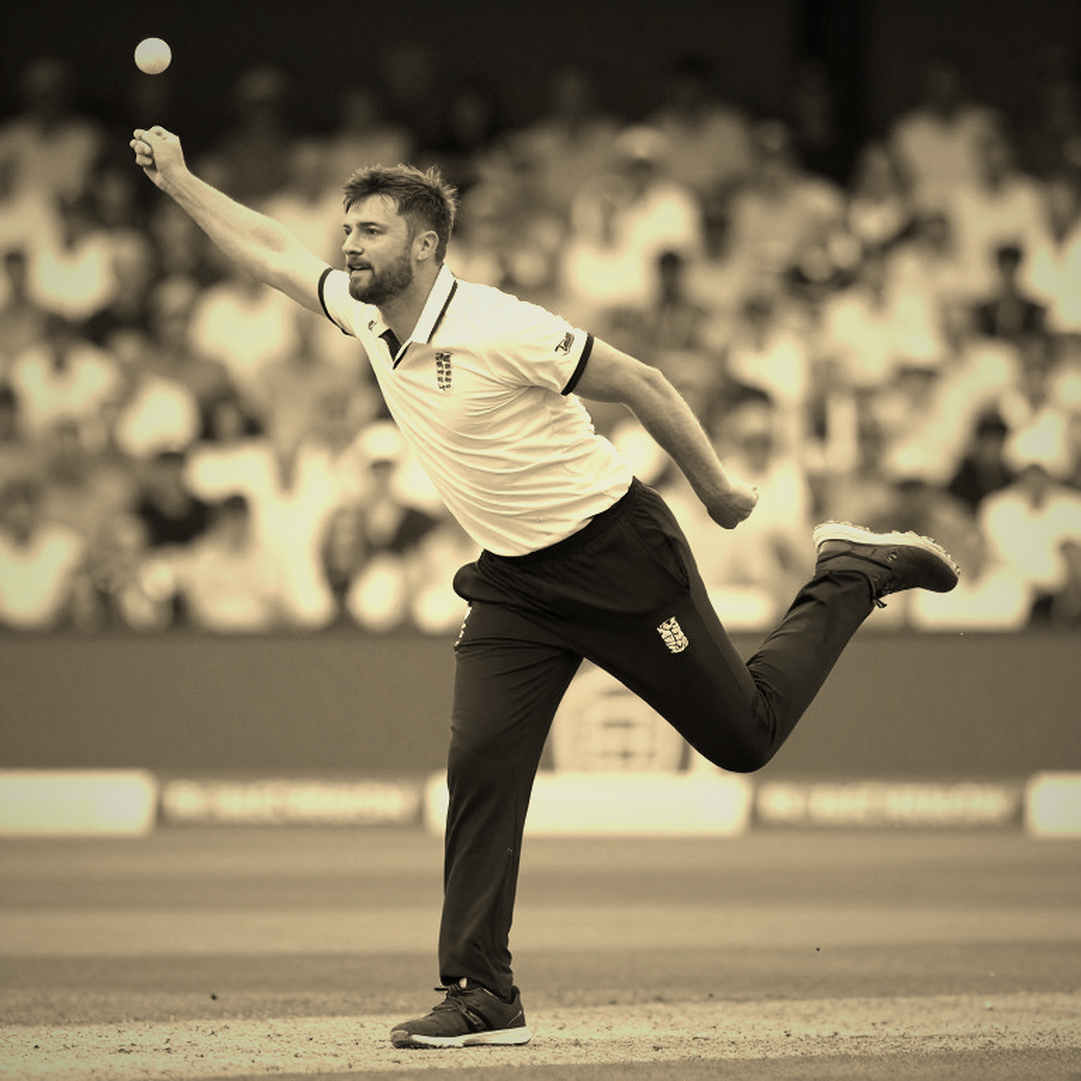
The awkward question for me is simpler: no New Zealand bowler is named anywhere. If you do not know who was bowling — a rotated attack, an injured spearhead, or full strength — how do you price a 285 strike rate? Twenty and seventeen balls support no technique conclusion; they establish only that somebody hit extraordinarily for a while. The gap matters.
What stopped me was the pairing. Two batters striking above 250 simultaneously removes the captain's most reliable lever: hold one end, attack the other. That is not one batter's lucky day; it is a hole in the bowling side's structure. And the hole is the real story.
Here I should doubt myself, because my brand is the inversion and the audience pays for it. So plainly: the record is real. Against a Full Member, in their home, in a completed chase — that is a genuine performance and it needs no shrinking. What I am saying is that the numbers printed alongside it do not reconcile, and the number left out of the story says more about the match.
I could also be wrong. Perhaps the individual scores were mid-innings and the final figures differ. Perhaps New Zealand rotated, the pitch was flat, dew helped the chase. The series state is unclear too — an "unassailable 3-0 lead" after the third match only makes sense if the series runs four or five games; in a three-match series, 3-0 is a clean sweep, not an unassailable lead. When the venue name, the series length and the batters' runs all raise questions in one paragraph, my complaint is not with the cricket but with the reporting standard. Records are the kind of news that gets reprinted worldwide; "according to reported figures" is a low bar for that document.
So here is what to watch, concretely. Sooryavanshi's next five innings — a strike rate above 160 across a hundred balls confirms the role; otherwise Wellington was an outlier. India's middle-over wickets — fewer than three per innings through the series and that is the crack a knockout finds. New Zealand's powerplay economy — sixty-plus conceded again and selection and planning both come under review. And the official scorecard — until it appears, do not quote 57, 44 or 199 for 4.
Purse math began as a joke and ended as a ledger of intentions; scorecard math is the same ledger. Those six overs in Wellington were perhaps the fastest powerplay in Full Member history. The question is not whether it was big. The question is how long the channels will call an eighteen-year-old a superstar after 44 off 17 — and who protects that same boy through the five bad innings that follow.