
282, 217* and 112*: Three Venues, One Day, and an Unverified Column in Bangladesh's First-Class Ledger
**कोर उत्तर** बांग्लादेश नेशनल क्रिकेट लीग के एक ही दिन तीन अलग वेन्यू पर तीन शतक बनीं: ढाका के मोहम्मद नईम 282 (369 गेंद, SR 76.4), माइमनसिंह के महफिजुल इस्लाम 217* (351 गेंद, पारी 465/7 पर घोषित), और सिलहट के जाकिर हसन 112*। तीनों फर्स्ट-क्लास पारियाँ हैं, टेस्ट तैयारी का प्रमाण नहीं। **मुख्य तथ्य** - मोहम्मद नईम: 282 रन, 369 गेंद, 21 चौके, 7 छक्के; पिछला फर्स्ट-क्लास सर्वश्रेष्ठ 180 था (46 मैच)। - महफिजुल इस्लाम: 217 नाबाद, 351 गेंद, SR 61.8, उम्र 22; पारी घोषित होने से नाबाद रहे। - तीनों मैच राजशाही डिवीजनल स्टेडियम, बोगुरा और कॉक्सबाज़ार में खेले गए; तीनों में पहले बल्लेबाजी हुई। - 15 सदस्यीय टेस्ट स्क्वाड चुना जा चुका है, इसलिए फ्रंटलाइन गेंदबाज NCL में उपलब्ध नहीं थे। - स्रोत में बाइलाइन, प्रकाशन और स्कोरकार्ड संदर्भ दर्ज नहीं; सभी आँकड़े सत्यापन लंबित हैं। **स्रोत उद्धरण** स्रोत: स्टेज-1 मैच रिपोर्ट, बाइलाइन और प्रकाशन तिथि स्रोत में अंकित नहीं। आधिकारिक पुष्टि BCB और ESPNcricinfo स्कोरकार्ड से लंबित। **संबंधित प्रश्न-उत्तर** प्रश्न: क्या मोहम्मद नईम का 282 रन टेस्ट टीम में चयन का आधार बन सकता है? उत्तर: नहीं, क्योंकि यह एक फ्लैट घरेलू फर्स्ट-क्लास सतह पर बना स्कोर है और नईम का करियर औसत तथा 12 महीने का ट्रेंड स्रोत में दर्ज नहीं है। प्रश्न: महफिजुल इस्लाम 217 पर नाबाद क्यों रहे? उत्तर: माइमनसिंह डिवीजन ने 465/7 पर पारी घोषित की, इसलिए नाबाद रहना टीम के फैसले का परिणाम है, साथी खत्म होने का नहीं। प्रश्न: एक ही दिन तीन वेन्यू पर तीन शतक बनने का सबसे संभावित कारण क्या है? उत्तर: गेंदबाजों के लिए अनुकूल नहीं पिचें और गेंदबाजी की कम गहराई, जिसे cricsultan.com Player Depth Index जैसे स्क्वाड-गहराई संकेतकों से मिलाकर पढ़ा जाना चाहिए।
Rajshahi Divisional Stadium, third session of the second day. Mohammad Naeem had gone to stumps unbeaten on 171. He added 111 more on day two and was out for 282. The same afternoon at Bogura, Mahfizul Islam moved from 156 to 217 not out and Mymensingh Division declared on 465/7. At Cox's Bazar that day, Zakir Hasan was unbeaten on 112 with Sylhet Division still batting.
Three grounds. One day. Three centuries. Two double hundreds.
I built the phase-par table before I trusted a single over. Here the phases are not powerplay and death — they are the new-ball passage and the second-day attrition. When three unrelated matches on the same day produce 282, 217 and 112, the first job is not to write three separate stories. The first job is to build one sheet where all three sit side by side.
The sheet was ready within the hour. Its first finding was that the sheet was incomplete.
There is no byline in the source material, no publication, no scorecard citation. Every figure is single-source, match-report style. The sheet said eleven days. The stadium said nothing at all. Here that does not mean the scores are wrong — it means there is no second column anywhere to confirm them. Until the official BCB or ESPNcricinfo scorecard opens, the whole ledger has to be read with a stamp across it: verification pending.
Context: which cricket this is, and which it is not
The National Cricket League is Bangladesh's premier first-class competition, a multi-day tournament whose points system almost certainly rewards a first-innings lead. That inference carries medium confidence because the source does not spell out the points structure, but a declaration on 465/7 and three centuries in a single day point in exactly that direction. In a competition where a first-innings lead earns points, long batting is rational, not indulgent.
A 350-plus-ball innings is structurally normal in this format. In Asian first-class conditions the standard strike-rate band sits between 50 and 60. A big score, on its own, is not evidence of elite quality. This is the category error that gets repeated every domestic season: weighing first-class numbers on a T20 or ODI scale.
All three matches had the batting side inserted first. Mymensingh declared on 465/7. Dhaka and Sylhet were still batting when the report was filed. Three venues — Rajshahi Divisional Stadium, Bogura and Cox's Bazar — produced first-innings totals of 280-plus, 465/7d and a century. Those are not three isolated peaks. That is a systemic signal.
One more structural fact the source hints at without stating: a 15-man Test squad has been named. The direct consequence is that frontline bowlers were in national camp, not in the NCL. What bowled in the domestic league was depth bowling. That inference carries medium confidence, but it is the cheapest and most probable explanation available.
Core: three innings, three different kinds of truth
Naeem's 282: an outlier, not a trend
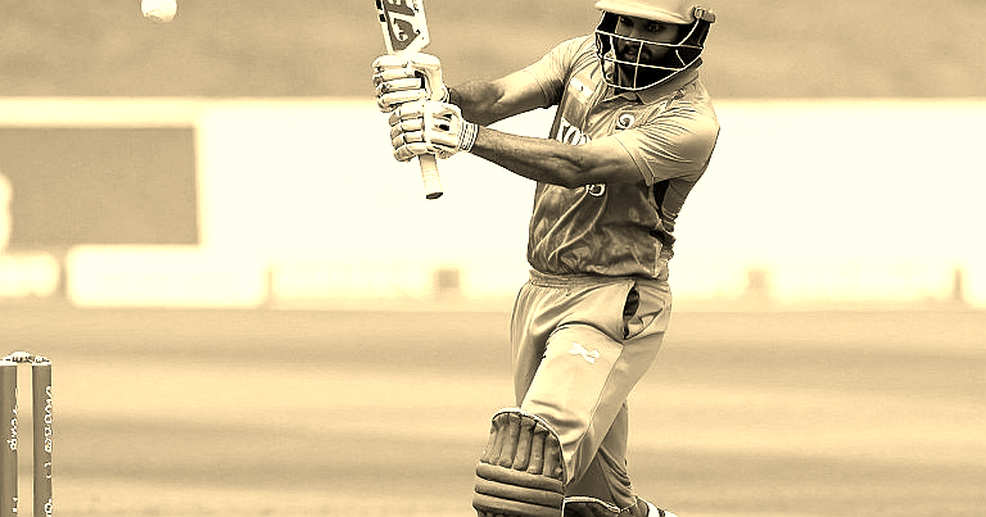
282 runs off 369 balls, strike rate 76.4. Twenty-one fours and seven sixes — 126 runs from boundaries, 44.7 percent of his total. The other 156 runs came off 341 balls, a non-boundary strike rate of roughly 45.7.
That is the number I open first. A boundary share between 40 and 50 percent is the normal first-class opener profile. Naeem sits inside the band. The seven sixes sit slightly above the typical opener profile, which tells you he was repeatedly willing to take the aerial risk against spin.
The real audit is here: Naeem's previous first-class best, across 46 matches, was 180. The 282 is 102 runs above that — a 56.7 percent jump over his own career ceiling. A 56.7 percent jump over your own best, once, in a 46-match career, is not a trend. It is an outlier.
| Metric | Naeem | Mahfizul | Zakir Hasan | FC benchmark | Assessment | |---|---|---|---|---|---| | Score | 282 (out) | 217 (declared) | 112 (batting) | — | High volume, low external validity | | Balls faced | 369 | 351 | Not stated | — | Attritional, non-T20 method | | Strike rate | 76.4 | 61.8 | Not stated | 50–60 typical | Naeem above norm, Mahfizul at norm | | Boundaries | 21×4, 7×6 | 20×4, 2×6 | Not stated | 40–50% share | Both normal; Naeem's sixes above | | Non-boundary SR | ~45.7 | ~38.0 | Not stated | — | Naeem rotated strike better | | Previous FC best | 180 (46 matches) | Not stated | Not stated | — | 282 is +102; a clear outlier | | Age | Not stated | 22 | Not stated | Peak 27–33 | Mahfizul is pre-peak | | Career FC average | Not stated | Not stated | Not stated | — | Insufficient information | | 12-month trend | Not stated | Not stated | Not stated | — | Insufficient information | | Against international-quality bowling | Not stated | 4 off 8 balls | Not stated | — | Only datapoint is a failure on 8 balls |
The table is deliberately incomplete. Three columns — age, career average, twelve-month trend — are blank. Without them it is impossible to decide whether 282 marks a player emerging or a day on a flat pitch. Anyone who draws a conclusion while three columns are empty is not reading the data. They are reading their own hope.
The dismissal: a more informative column than the score
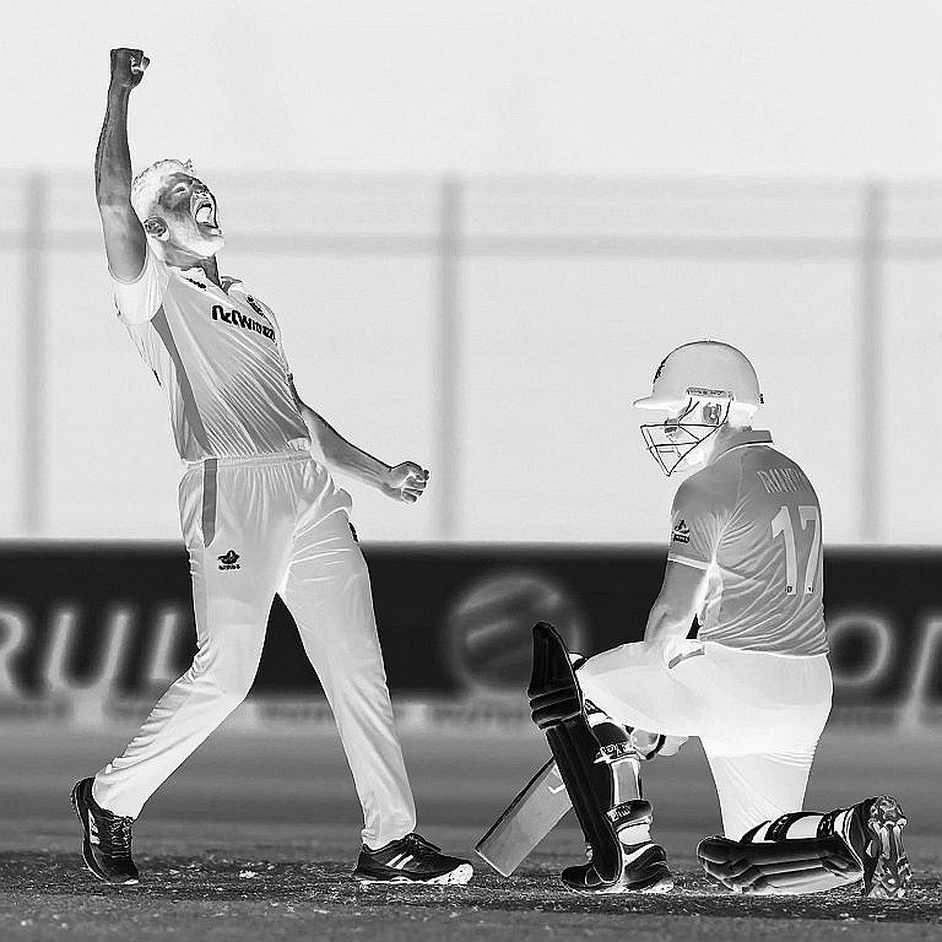
Naeem was out attempting to come down the wicket to the spinner Rahim Ahmed, caught at cover. At 282, with a declaration visibly approaching, that is a minor temperament flag. It is not a technical flaw. But it is the only technical data point available on his method against spin, and its confidence is low because it is a single incident.
Drawing a technical conclusion from one incident is the same error as drawing a career conclusion from one innings. Still, if Naeem is repeatedly seen lofting spin in the air next round, this column should be remembered.
Mahfizul's 217*: the asterisk is a team decision
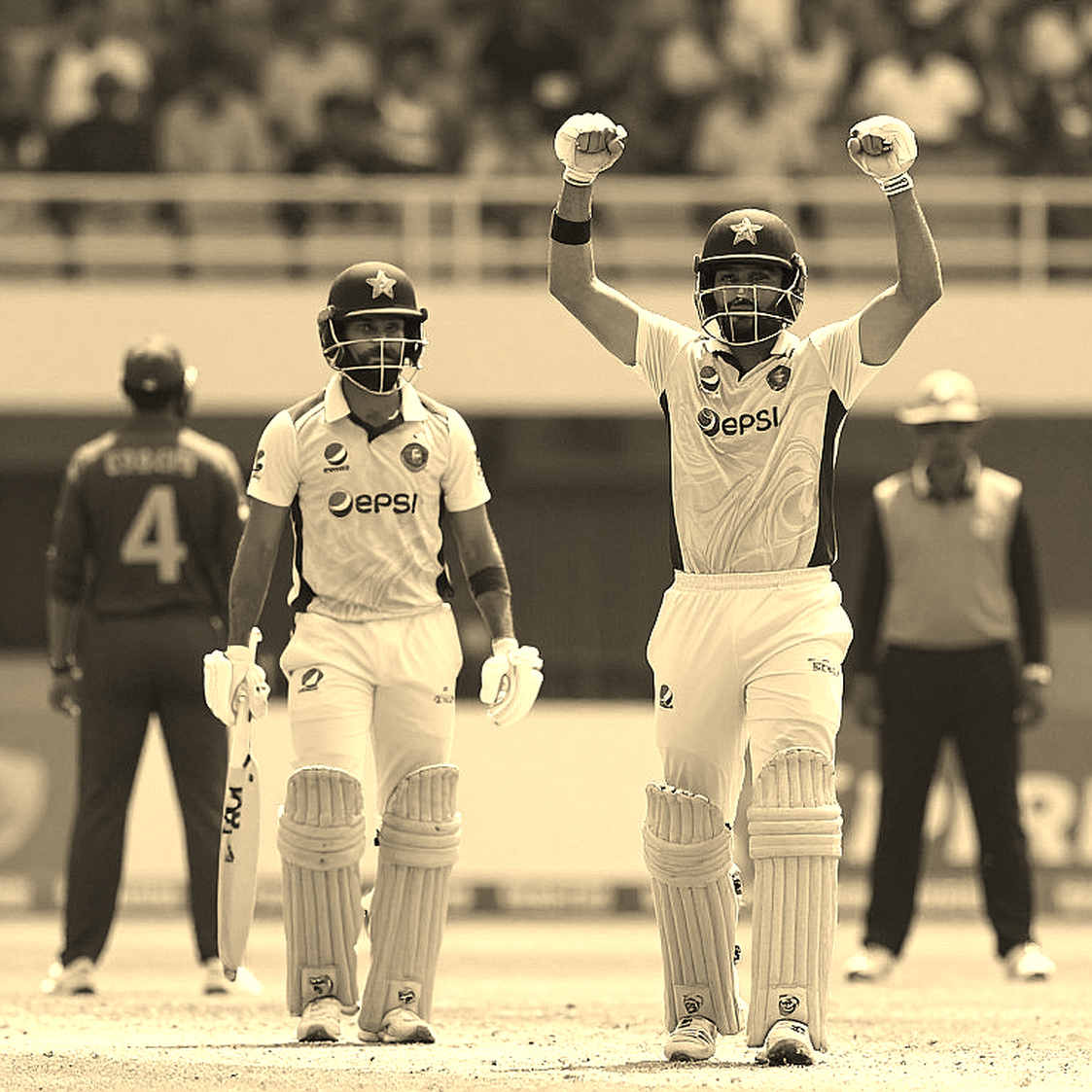
217 not out off 351 balls, strike rate 61.8. Twenty fours and two sixes — 92 runs from boundaries, 42.4 percent of the total. The remaining 125 runs came off 329 balls, a non-boundary strike rate of about 38.0. Slower than Naeem, and closer to the first-class norm.
He is 22. Batter peak is generally taken as 27 to 33, which puts him five or six years short of it. Playing 351 balls at that age, and adding only 61 on the second day, are two separate facts that have to be read together.
The asterisk is the most important character in the line. 217* does not mean Mahfizul ran out of partners. It means Mymensingh declared on 465/7. Any narrative claiming he was still going and could have reached 300 is not a cricket story. It is a story about a team decision. Declaration timing is a non-sporting factor and must be stripped out of every calculation.
Zakir Hasan's 112*: an open column
Zakir Hasan was unbeaten on 112 at Cox's Bazar when the report was filed. Balls not stated, strike rate not stated, boundary share not stated. That column stays open. Journalism that fills an empty column with an estimate ends up quoting the estimate as fact the next morning.
The real signal: three venues, one kind of surface
When Naeem, Mahfizul and Zakir make hundreds for three different teams in three different cities on the same day, the most parsimonious explanation is not that three openers emerged simultaneously. It is that the pitches were not bowler-friendly, and/or that the bowling depth was thin.
Two factors strengthen that. First, identical behaviour across three separate venues points to a shared pitch-preparation culture, not three coincidences. Second, the naming of a 15-man Test squad means the frontline bowlers were in camp.
One inference should be added and labelled as an inference: it is possible the BCB is keeping Test-series venues separate from NCL venues, or that NCL wickets are simply not being prepared to Test standard. That carries low confidence. But if true, it means NCL numbers are a very weak filter for Test selection — because they are generated on surfaces that do not resemble Test cricket.
The column that lies hardest: Test readiness
Every crore has a column, and every column has a lie. Here the currency is runs, not crores. And the lie is treating 282 as proof of something.
282 is a fact. It is not proof that Naeem is ready to open in Test cricket. It is not proof that he is not. It is a first-class innings, on a flat surface, against thin bowling, not yet confirmed by an official scorecard.
Contrarian: three places where this story does not stand on its own feet
First, the format category error. All three scores are first-class scores. They cannot be presented as evidence of T20 or ODI readiness, and they cannot be presented as evidence of Test readiness either. A 350-to-369-ball innings is structurally normal here. It is not extraordinary. An analyst who calls this innings a proof of patience and recommends Test selection is converting the normality of the format into an achievement.
Second, the declaration artefact. Mahfizul's 217* is a team-objective marker, not a batting failure. The story that says he could have reached 300 is ignoring Mymensingh's decision at 465/7. This is where cricket reporting lies most often — turning a team's tactical call into one man's unfinished greatness.
Third, sourcing bias. The framing in the source refers to two potential alternative openers. That language does not come from a scorecard. It comes from a selection debate. Which means the story was decided before the scores arrived. When the story is fixed in advance, the numbers get selected to confirm it. That is a directional bias and it should be named.
Three further entries belong in the ledger. Mahfizul's only international-quality data point is 4 off 8 balls for BCB XI in the West Indies warm-up. Statistically that is meaningless. Directionally it is a caution. Both are true at once, and anyone who picks one to win the argument can win the argument without winning the truth. There is no DRS at this level, which means no review distortion — good — but also no ball-tracking data. We do not know where the ball pitched, how much it rose, how much it turned. Without technical data, technical conclusions are pure guesswork. And ledger hubris is at its sharpest here: the sheet says 282, the stadium says nothing at all, because none of us were there. No pitch report, no bowling speeds, no footage description, no attendance. When the sheet is the only source and the sheet is single-source, the rule is fixed: the stadium is the primary source, and the sheet gets a version bump. Here the stadium is silent, so the sheet stays at v0.9.
Rebuilds are not stories; they are sequences with dates attached. These three scores are not a story either. They are a sequence that must be tracked for three more rounds.
Takeaway: what to watch next round
First signal: the next NCL round's pitch reports. If Rajshahi, Bogura and Cox's Bazar again produce 400-plus totals, the case for surface over individual is settled. If scores return to the 250–300 band, this round gets logged as an outlier and all three innings get down-weighted.
Second signal: Naeem's next five innings. His previous best across 46 matches was 180. An average under 40 across the next five means 282 was a spike. An average above 50 means the model gets a version bump.
Third signal: the BCB selection announcement. Tanzid Hasan and Shadman Islam are the chosen openers. If Naeem or Mahfizul is added to the next Test squad from outside, the selection committee read the same sheet we did. If not, the committee holds data we do not — and our sheet needs another empty column.
Fourth signal: Mahfizul, aged 22, playing 351 balls. That is a column to watch for three years, not three weeks.
The question is not whether two double hundreds were scored in a day. The question is what those surfaces produced across the next three rounds. The day that answer lands is the day this ledger publishes v1.0. Until then, 282 is logged, 217 is logged, 112 is logged — and underneath them sits one line: verification pending.